Vision China 2025 Shenzhen | Vision Agent 2.0: embodied intelligence + zero-code
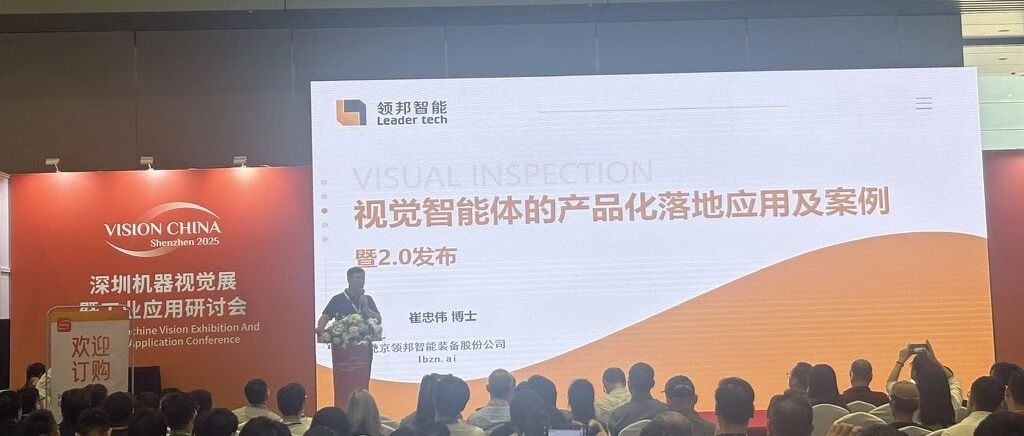
Under the banner “VISION + AI for electronics manufacturing,” Dr. Cui Zhongwei launched Vision Agent 2.0 at the Vision China 2025 Shenzhen summit. The stack is a cross-domain inspection foundation model, embodied hardware, and a zero-code software platform. On top of the 1.0 hardware–software whole, 2.0 pushes ease of use and inference speed: rich templates and drag-and-drop configuration, so a line can adapt with few edits.

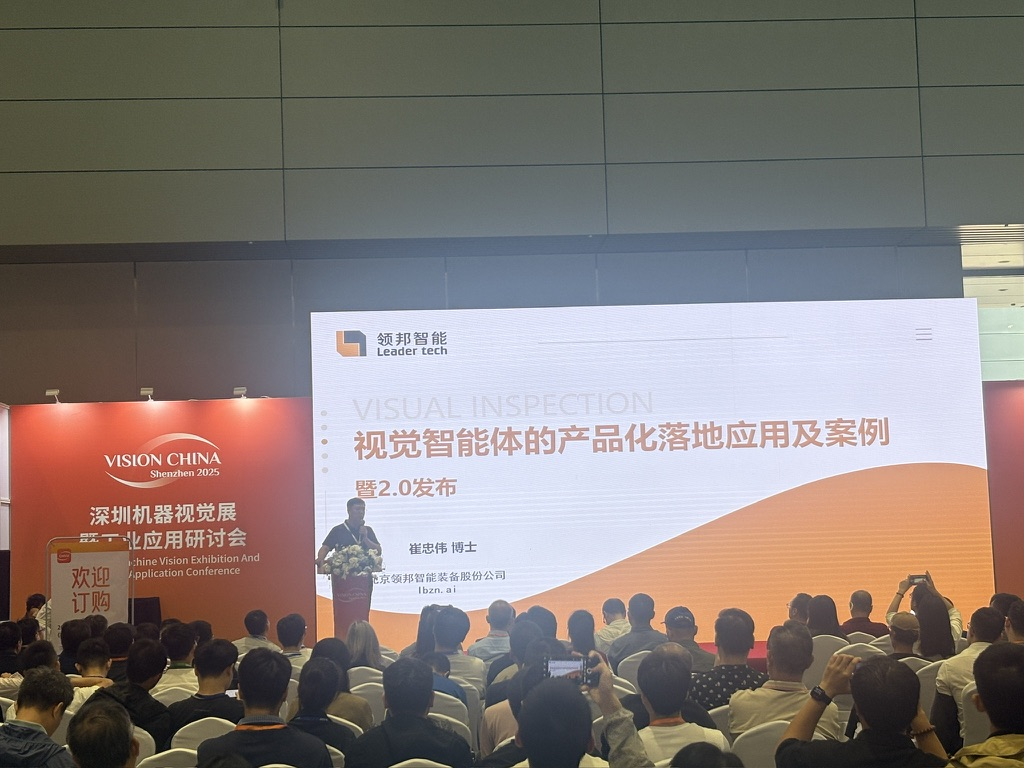
On 28 October 2025, Vision China 2025 (Shenzhen) opened at the Shenzhen World Exhibition & Convention Center. The concurrent “Machine Vision Technology and Industrial Applications” summit heard Cui’s talk, “Productizing the Vision Agent, with cases — and the 2.0 launch.”

1.0 — foundation: inspection model + embodied hardware
Lingbang’s Vision Agent is not a software algorithm alone. It is an embodied product: software and hardware bound together. Version 1.0 already set two bases.

01 · Core: the inspection foundation model. It breaks the “one small model, one scene” limit, with cross-domain generalization for the few-shot, high-generalization problem.

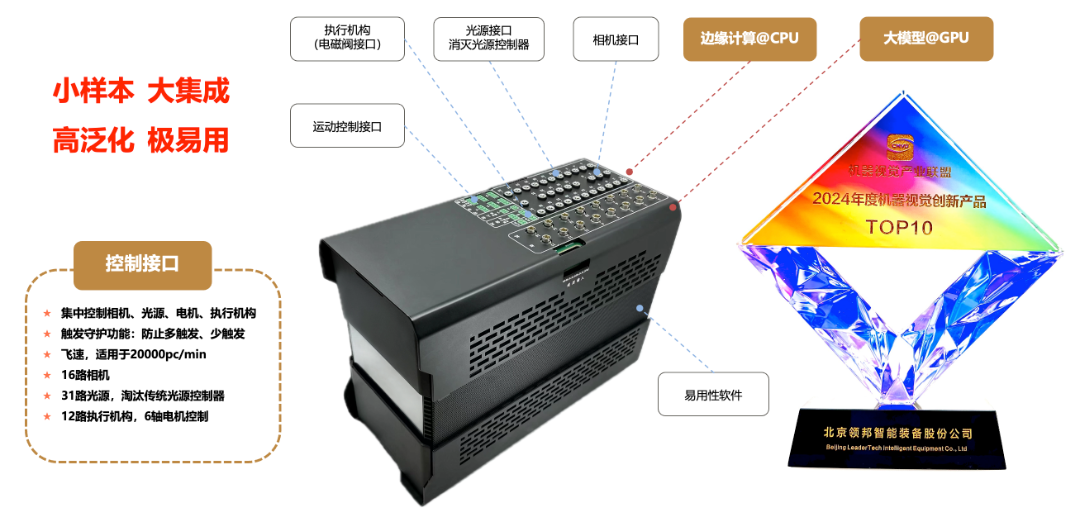
02 · Form: embodied hardware. Not only an edge box—it is a control hub with cameras, lights, motors and actuators: up to 16 cameras, 31 lights and 12 actuators. An AI brain and agile limbs in one.

If 1.0 solved generalization (few-shot, cross-domain) and deep integration (lights, mechanics, electrics under one control), 2.0 is the last mile of ease of use.

2.0 — zero-code, rich examples
“The job of 2.0 is to let a line engineer become an AI expert,” Cui said. Two moves close the last mile.

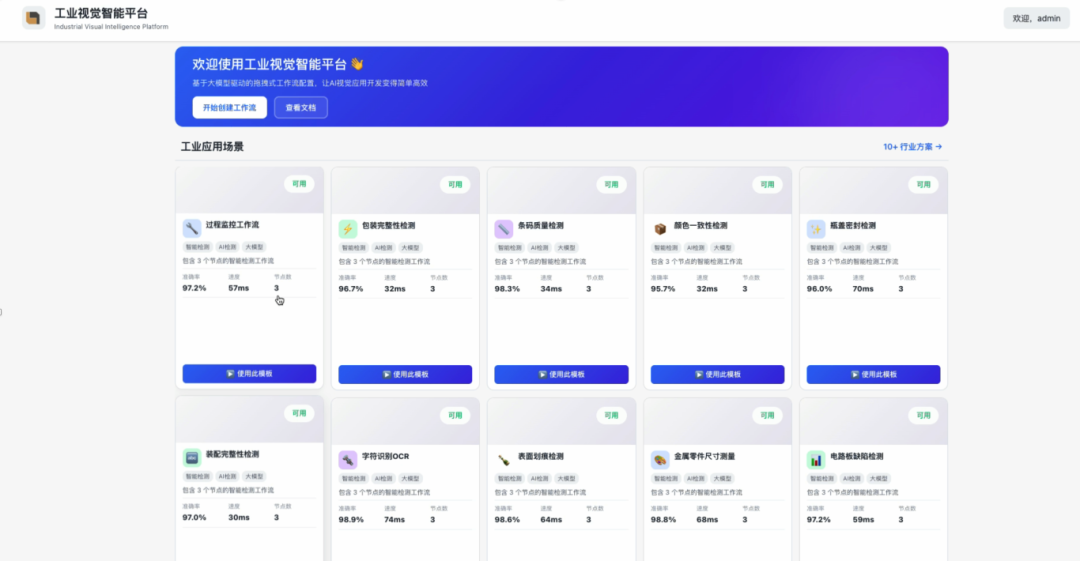
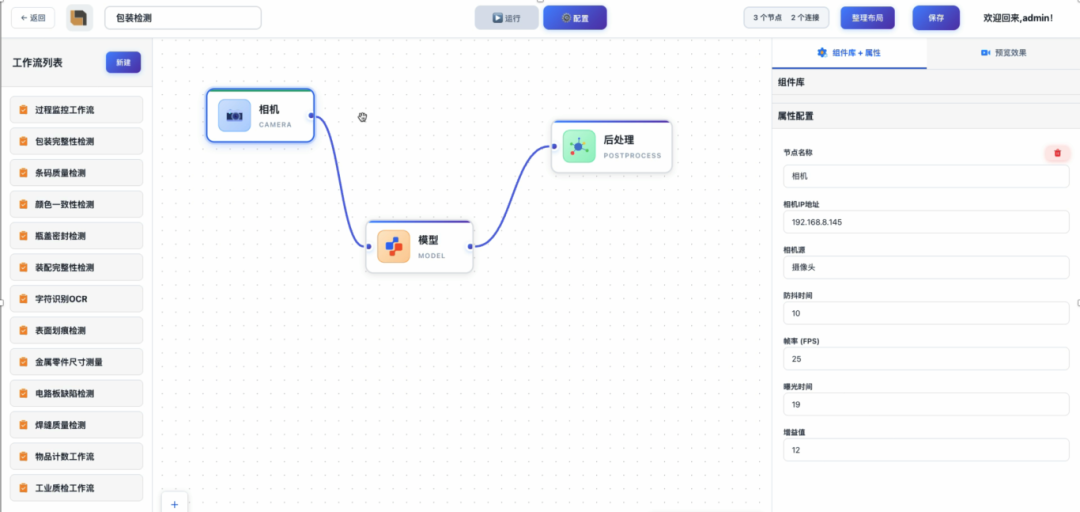
Highlight 1: revolutionary drag-and-drop, zero code. Users never write a line. Visual nodes—camera, model, post-process—snap together like blocks. A complex inspection workflow can be built, configured and deployed in minutes.

Highlight 2: built-in application examples. Templates cover process monitoring, multi-defect inspection, barcode reading, color consistency, surface scratches and other common jobs. Pick the closest example, change a little, adapt fast—agile, out of the box.
Highlight 3: “Mach-class” inference, 200+ FPS. Driven by the foundation model and deep optimization, image throughput exceeds 200 frames per second—millisecond response on a fast line.
Across scenes: inspection, assembly, SOP
With a general model, embodied hardware and a zero-code 2.0 platform, the agent covers three core industrial scenes: high-accuracy inspection, complex assembly correctness, and SOP process monitoring.
Vision Agent 2.0 marks industrial vision AI moving from an expert tool to a platform more people can use—a concrete path for VISION + AI in manufacturing.